October 25, 2026
Four wheeler loan, used car finance
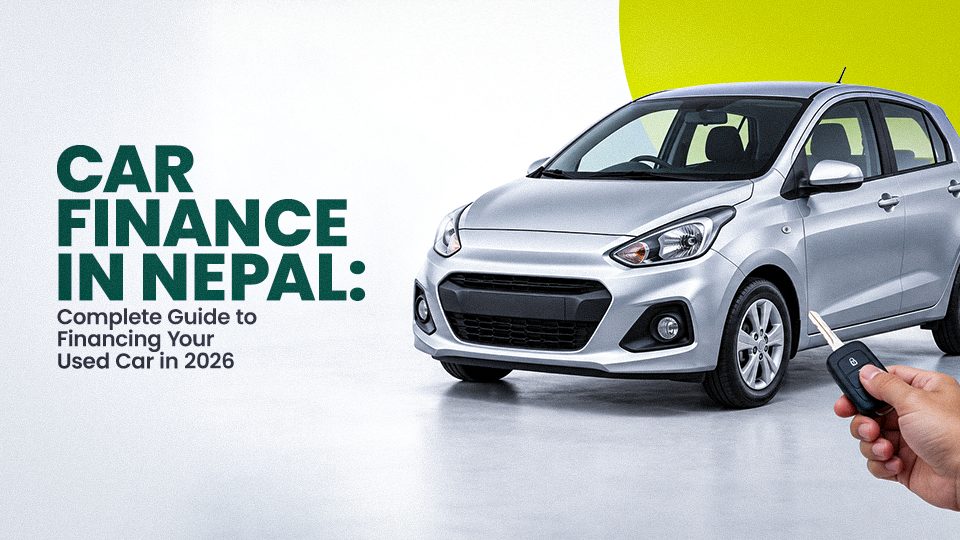
Buying a car is a major financial decision, particularly when you are considering a used or reconditioned vehicle. Although second hand cars can be more affordable than new models, arranging the entire purchase price from your savings may still be difficult.
This is where car finance in Nepal can help spread the cost over manageable monthly payments. Instead of paying the full vehicle price upfront, buyers can make a down payment and finance the remaining amount through a structured loan.
But how much should you borrow? What down payment should you prepare? How does the interest rate affect your EMI? And what documents do you need? This blog answers these questions while explaining what buyers should consider before financing a used car in Nepal.
Used car finance allows you to purchase a second hand or reconditioned vehicle by paying a portion of the price upfront and financing the remaining amount.
The financed amount is then repaid through monthly EMIs over an agreed period. This can make vehicle ownership more accessible for buyers who do not want to use all their savings at once.
The process begins with selecting an eligible vehicle and deciding how much you can afford as a down payment. The remaining amount can then be considered for financing based on the applicable financing policy, vehicle value, and applicant’s eligibility.
Financing can be available for new and reconditioned four wheelers under applicable terms. Reconditioned vehicles are generally purchased through authorized reconditioned houses approved by the financing provider.
A used car can offer a more accessible entry point into vehicle ownership. Depending on the model, age, and condition, buyers may be able to get a vehicle at a lower purchase price than a comparable new car.
Financing can further spread this cost over several months. However, buyers should not choose a loan simply because they qualify for it. The EMI should fit comfortably within monthly income after accounting for household expenses, savings, and other commitments.
Paying cash means avoiding loan interest, but it can significantly reduce your savings.
Financing adds an interest cost, but it allows you to retain some cash for emergencies and other priorities. The better option depends on your savings, income, expected EMI, and overall financial situation.
One of the first questions buyers ask when researching car finance in Nepal is how much of the vehicle price can actually be financed.
The amount depends on the financing structure, vehicle value, and applicant’s financial profile.
Under the current four wheeler financing structure, financing can cover up to 60% of the total product cost, subject to the applicable terms and assessment.
For example, if an eligible vehicle costs NPR 30 lakh, up to NPR 18 lakh could potentially be financed. The remaining NPR 12 lakh would be arranged by the buyer as the down payment.
The actual approved amount depends on the applicable assessment.
The down payment is the portion of the vehicle’s price that you pay yourself.
A higher down payment means borrowing less, which can reduce your monthly EMI and overall financing cost. However, using too much of your savings for the down payment can leave you with limited funds for emergencies.
The goal is to find a balance between reducing the loan amount and maintaining sufficient savings.
The current four wheeler financing structure also includes two relevant down payment options:
Both options can have a repayment period of up to 60 months.
A buyer with more available savings may prefer the higher down payment because it reduces the amount financed and comes with the lower listed rate.
Interest rate is an important part of any financing decision, but it should not be considered separately from the loan amount and repayment period.
A lower monthly EMI does not necessarily mean a cheaper loan. Buyers should compare the interest rate, amount borrowed, tenure and total repayment before making a decision.
The amount you pay upfront can affect both the amount you borrow and the applicable financing rate.
Before choosing a structure, consider:
This gives you a clearer picture of the actual cost of car finance in Nepal.
Loan tenure determines how long you will continue making monthly payments.
The maximum listed repayment period for the four wheeler financing facility is 60 months.
A longer tenure can make the monthly payment easier to manage, while a shorter tenure allows you to complete the financing sooner.
Do not automatically select the longest tenure simply because the EMI appears lower.
Consider your monthly income, existing financial commitments, and other vehicle related expenses. If you can comfortably manage a shorter repayment period, it may help reduce the time you remain committed to the loan.
Eligibility should be checked before you finalize your vehicle.
The current requirements specify that the borrower must be a Nepali citizen, at least 18 years old, with a maximum age of 65 years at loan maturity.
Applicants should have a regular source of income and provide supporting documentation.
Income verification helps determine whether the applicant has sufficient repayment capacity.
A personal guarantor is required under the current four wheeler financing terms.
A family member is preferred as the personal guarantor, although a third party guarantor may also be acceptable under the applicable requirements.
Meeting the eligibility requirements does not necessarily mean that every available loan amount is suitable for you.
Before applying, consider whether the expected EMI can be managed alongside household expenses, savings, insurance, servicing, fuel or charging and unexpected repairs.
Having your documents ready can make the financing process easier.
Common requirements include:
Business owners may also need documents such as business registration, PAN/VAT documents, tax clearance and other business related records.
Requirements can vary according to the applicant’s income source and circumstances, so confirm the latest requirements before applying.
Understanding your estimated EMI before buying a car can prevent you from taking on an uncomfortable financial commitment.
The three major factors are:
Borrowing more generally increases the EMI. A longer tenure can reduce the monthly payment but may keep you committed to the financing for a longer period.
Suppose you are considering a vehicle priced at NPR 30 lakh.
With a 40% down payment:
With a 50% down payment:
These figures demonstrate how the financing structure works. The actual EMI should be calculated using the applicable terms and an official EMI calculator.
Start with a realistic budget rather than choosing a car first and worrying about financing later.
Include the down payment, EMI, and ownership costs in your calculation.
Look for a vehicle that meets your requirements and falls within the applicable financing criteria.
Pay attention to the vehicle’s age, condition, maintenance history, and documentation.
Compare the available down payment, interest rate, loan amount, and tenure to determine which structure fits your finances.
Confirm your age, citizenship, income, and guarantor requirements before submitting an application.
Prepare your identification, income, and residence documents along with any additional records applicable to your situation.
The financing application is reviewed according to the applicable assessment criteria. Make sure all information provided is accurate and complete.
Once approved and the required formalities are completed, the vehicle is financed according to the agreed terms and serves as security for the financing.
Once the financing begins, make your monthly payments on time according to the agreed schedule.
Before committing to a used car, consider more than just the purchase price.
Check the vehicle price: Make sure you understand the total cost.
Plan the down payment: Do not exhaust your savings just to reduce the loan.
Calculate the EMI: Make sure the monthly payment is comfortable.
Inspect the vehicle: Check its condition and maintenance history.
Review the financing terms: Understand the interest rate, tenure and repayment conditions.
Budget for ownership: Include insurance, servicing, fuel, charging and unexpected repairs.
A little planning before taking car finance in Nepal can prevent financial stress later.
Missing an EMI can increase your financing cost.
Under the current financing terms, a 2% penalty per month on the total overdue amount applies when an EMI is not paid on time.
This makes proper EMI planning important. Set a reminder for your payment date and maintain sufficient funds for the monthly installment.
If you anticipate difficulty making a payment, communicate with the financing provider rather than allowing the amount to remain overdue without explanation.
Do not borrow the maximum amount simply because it is available.
Choose a monthly payment that leaves room for household expenses, savings and other financial commitments.
Before making a large down payment, make sure you still have enough savings to handle unexpected expenses.
This can be particularly important with used vehicles, where maintenance requirements may vary depending on the vehicle’s age and condition.
Calculate your expected EMI before deciding which vehicle to buy.
This allows you to compare different loan amounts and repayment periods and determine whether the vehicle fits your monthly budget.
Timely repayment helps you avoid overdue charges and keeps your financing organized.
Treat the EMI as a fixed monthly expense rather than something that can be postponed.
Hulas Finserv can be an option for buyers looking to finance a new or reconditioned four-wheeler in Nepal. Its financing facility offers up to 60% of the total product cost, with repayment periods of up to 60 months.
Buyers can also use the available EMI calculator to estimate their monthly repayment and better understand their potential financial commitment before purchasing a car. Eligibility and documentation requirements are clearly defined based on the financing terms.
For those comparing car finance in Nepal, these financing options can make it easier to plan the down payment, EMI and repayment period. However, buyers should always review the applicable terms and choose a repayment amount that fits their budget.
Choosing car finance in Nepal should not be about borrowing the largest amount possible. It should be about finding a vehicle and repayment plan that fits comfortably within your financial situation. Consider your income, savings, monthly expenses and other financial commitments before deciding how much you can afford to finance.
Before making a decision, calculate your down payment, estimate your EMI, understand the applicable interest rate and repayment tenure and keep enough savings for unexpected expenses. Taking time to compare your options can help you avoid unnecessary financial pressure and make your used car purchase more manageable.
For buyers looking for a financing option for a new or reconditioned four wheeler, Hulas Finserv offers financing facilities based on applicable eligibility, down payment, financing amount, and repayment terms. Reviewing the available financing options and calculating your expected EMI beforehand can help you make a more informed decision about your car purchase.
Yes. Financing is available for eligible new and reconditioned four wheelers through approved channels, subject to the applicable requirements.
Common documents include photographs, citizenship documents, a valid driving licence, income source documents and proof of residence. Additional documents may apply depending on your income source.
Applicants must meet the applicable age, citizenship and income requirements. The current terms specify Nepali citizenship, a minimum age of 18 and a maximum age of 65 at loan maturity.
Yes. A personal guarantor is required under the current four wheeler financing terms.
Checking Eligibility