May 13, 2026
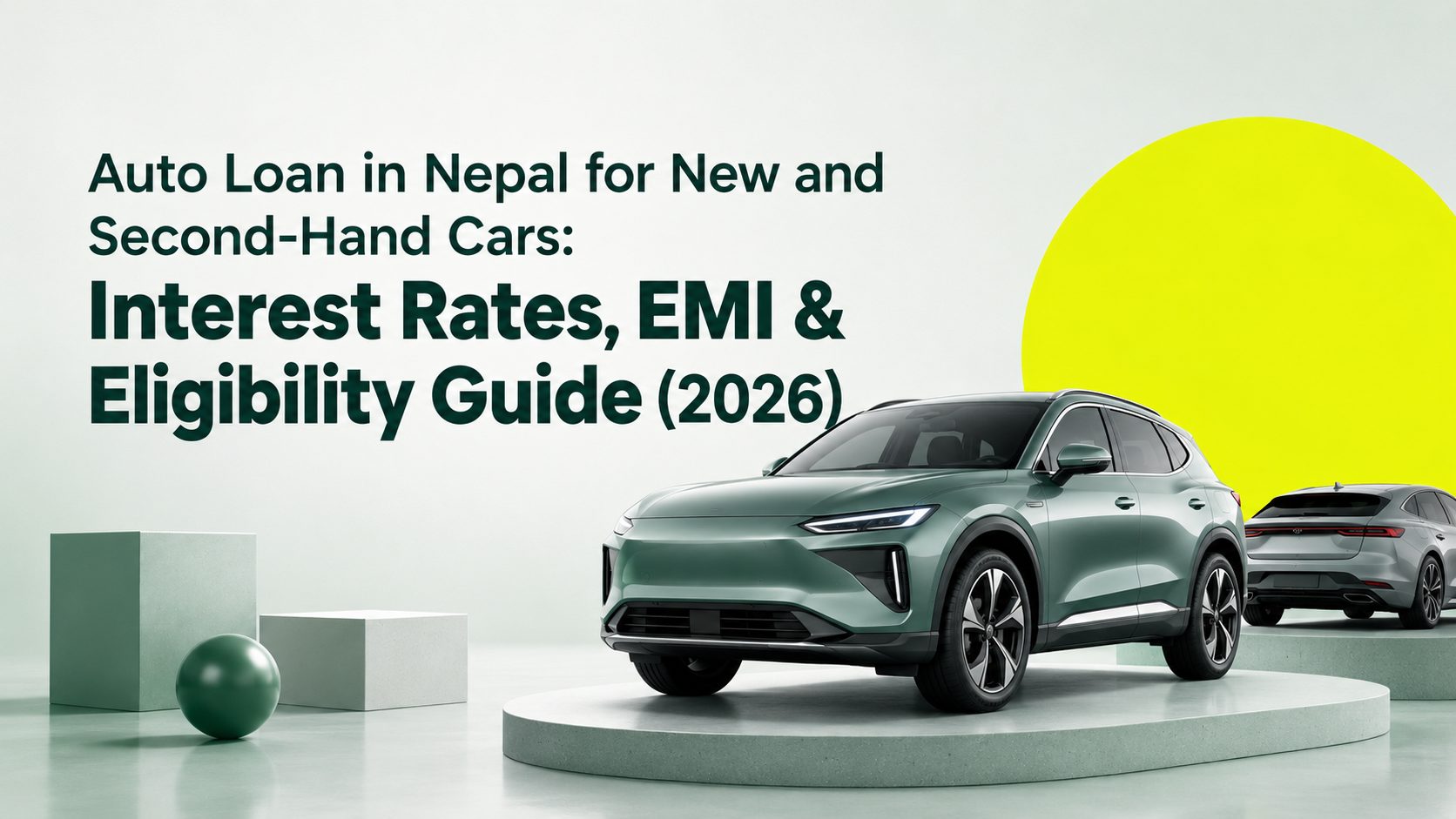
Buying a car in Nepal, whether it’s brand new or pre-owned, has become much more manageable with structured financing options. Instead of paying a large lump sum, you can now rely on a well-planned auto loan to spread the cost over time. This is especially useful if you are considering a used car loan or a second-hand car loan, where affordability and flexibility matter the most.
In this detailed guide, you’ll learn how an auto loan in Nepal works, what interest rates to expect, how EMI is calculated, and how to apply.
An auto loan in Nepal is a vehicle financing facility that allows individuals to purchase new or reconditioned cars by paying the cost through monthly EMIs instead of making a full upfront payment.
The vehicle itself acts as collateral, meaning the lender holds a legal claim on it until the loan is fully repaid. This structure reduces risk for lenders and makes it easier for borrowers to access financing.
Vehicle financing has grown steadily in Nepal, especially for reconditioned cars, as more people look for cost-effective alternatives to new vehicles.
The process of getting an auto loan is straightforward and follows a structured path:
New car loans are ideal if you want the latest model with better financing benefits. These loans generally offer:
This type of loan is suitable for buyers with stable income who want lower EMI and longer repayment flexibility.
A used car loan or second hand car loan is designed for pre-owned vehicles. These loans are slightly more conservative because the vehicle has already depreciated.
Key features include:
Despite these conditions, used car loans remain popular because they reduce the overall cost of ownership.
Reconditioned cars and imported and refurbished vehicles are widely financed in Nepal.
Here are the key details:
This makes it easier for buyers to access reliable vehicles without dealing with complex procedures.
The Loan-to-Value (LTV) ratio determines how much of the car’s value the lender will finance. In Nepal:
Vehicle age plays a key role in loan approval. Generally:
This ensures that the vehicle retains reasonable value throughout the repayment period.
For a second hand car loan, borrowers must contribute a significant portion up front:
This reduces risk for lenders and ensures borrowers have a financial stake in the purchase.
Loan tenure for used cars is shorter compared to new vehicles:
A shorter tenure also means higher EMI but lower total interest paid.
Auto loans in Nepal are offered under two main interest structures:
Each option has its pros and cons, depending on your financial planning.
Several factors influence your final interest rate:
EMI= P⋅r⋅(1+r)^n / (1+r)^n−1
Where:
Using an EMI calculator helps you understand your monthly obligation before applying for a loan.
The EMI for an auto loan in Nepal depends on factors such as the loan amount, interest rate, and repayment tenure. Generally, a new car loan may have a lower EMI when offered with a lower interest rate and longer repayment period. In comparison, a used car loan may have a different EMI structure depending on the vehicle value, financing amount, applicable interest rate, and tenure.
For example, if you take a car loan of NPR 20,00,000 at an interest rate of 9.25% for 60 months, your estimated monthly EMI would be around NPR 41,800. If the same loan amount is calculated at a different interest rate or shorter repayment period, the monthly EMI amount may increase.
With Hulas Finserv Hire Purchase Ltd, you can use the EMI calculator to estimate your monthly repayment amount by entering your required loan amount, applicable interest rate, and loan tenure. Hulas Finserv provides four wheeler loans for new and reconditioned cars with financing of up to 60% of the total vehicle cost and repayment tenure of up to 60 months, helping you plan your car purchase with better financial clarity.
Used car loans involve additional checks:
For business applicants, additional documents may include:
Document requirements may vary depending on the borrower profile.
Below is a step-by-step guide to apply for an auto loan:
Select a new or reconditioned vehicle from a trusted dealer.
Compare auto loan options from lenders like Nepal Bank Limited, Global IME Bank, and Siddhartha Bank.
Provide all required documents for verification.
The lender reviews your profile and evaluates the vehicle.
Once approved, funds are disbursed, and ownership is transferred.
Hulas Finserv makes getting an auto loan in Nepal more accessible with flexible financing options for both new and reconditioned cars. With down payment options starting from 40% of the total vehicle cost, buyers can plan their finances according to their budget and repayment capacity. Hulas Finserv offers competitive car loan interest rates ranging from 8.25% to 9.25%, depending on the selected down payment option, helping customers manage their overall borrowing cost effectively.
The loan process is designed to be simple and efficient, allowing customers to finance their desired vehicle through company-approved dealers with a smooth documentation and approval process. This streamlined approach helps reduce unnecessary delays and provides a more convenient financing experience.
Another key advantage is the flexibility to finance both new and reconditioned four-wheelers, giving customers more choices based on their requirements and budget. Once the loan is approved, EMI repayments can be made conveniently through multiple digital payment options, including eSewa, Khalti, connectIPS, IME Pay, and Fonepay.
Most lenders offer up to 50–60% financing. Hulas Finserv provides up to 60%.
In most cases, yes. Vehicles must meet age limits by loan maturity.
With Hulas Finserv auto loans, the minimum down payment starts at 40% of the total vehicle cost.
It depends on your needs, but Hulas Finserv Hire Purchase Ltd is a strong option for reconditioned vehicle financing.
Approval generally takes a few working days, depending on documentation. Choosing the right auto loan in Nepal requires comparing options, understanding EMI, and selecting a lender that offers clarity and flexibility.
Checking Eligibility